
© TIL LP / National 9/11 Memorial and Museum
Commemorating and educating: an interview with Cliff Chanin, Director of the 9/11 Memorial & Museum
Published on
22nd October 2026
updated on
23rd October 2026
9/11, 25 years later
© David Starke
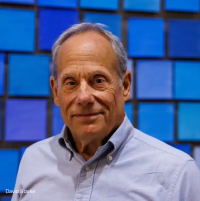
To mark the 25th anniversary of 9/11, the Museum and Memorial of Terrorism interviewed Cliff Chanin, director of the National September 11 Memorial & Museum in New York. He reflects on how the United States has commemorated this date, on the prominence given to first responders and those who died as a result of the attacks, and on the work being done to pass on this legacy to younger generations. He also discusses the role of artistic creation and the common ground between memorial museums dedicated to terrorism.
MMT—Twenty-five years later, what have the 9/11 commemorations meant for American society as a whole? What role does this date play in public discourse and collective memory in the United States?
Cliff Chanin - I believe the 25th anniversary was an opportunity for the country to pause and look back at the past—at those 102 minutes that the event lasted—but also to reflect on its impact and its resonance twenty-five years later. Of course, we don’t all agree on how to respond to 9/11, nor on the state of our society today. But it was nonetheless a moment when the country came together around the memory of the events and the victims.
MMT - How did the National September 11 Memorial & Museum approach these commemorations? What specific role do you give to first responders, particularly the 343 firefighters who lost their lives during these terrorist attacks?
Cliff Chanin - Every year, including for the 25th anniversary, the commemoration ceremony consists of reading the names of the victims—2,977 names—which lasts about four hours. Among these names are, of course, those of the first responders, including the 343 firefighters.
Since the museum opened in 2014, we have, of course, incorporated testimonies from firefighters, police officers, and other first responders into our programs; these serve as the starting point for the narrative of the event and that day.
In our programs for the 25th anniversary—particularly the educational programs—we once again highlighted the stories of the responders, that is, those who ran toward danger instead of running away. On this occasion, we heard some truly extraordinary stories, including reunions between people who hadn’t seen each other in 25 years.
We never forget the impact of these stories and testimonies.
MMT - Every year, the 9/11 Memorial welcomes several million visitors who come to pay tribute to the victims of the attacks. What is the purpose of this memorial site?
Cliff Chanin - The purpose is both to commemorate and to educate. Over the years, I’ve come to understand that education has become a central element of commemoration, because the population in 2026 is obviously not the same as it was in 2001.
There is an entire new generation—representing roughly one-third of the U.S. population—that was not yet born or has no direct memories of the event. Our responsibility, therefore, is to educate this generation about what happened, while continuing to commemorate the victims, especially for their families and for those who survived.
MMT - Since the museum opened in 2014, a significant number of people have died as a result of the attacks. How do you honor them at the Memorial Museum?
Cliff Chanin - Over the years, we’ve realized that we hadn’t given sufficient attention to the effects of the toxic dust produced by the collapse of the towers. In recent years, we’ve therefore added an exhibition, as well as testimonies from survivors who today suffer from illnesses caused by that dust.
We’ve also observed that the number of people who have died as a result of the attacks since September 11 now exceeds the number of victims on the day itself. We’ve therefore reorganized our programming around the fact that the victims are still with us: unfortunately, their numbers continue to grow as time goes on.
MMT - While today a growing proportion of visitors have no personal memory of 9/11, you had more than a million schoolchildren and students, including those from abroad, online on September 11 to talk with you—what lessons have you drawn from this?
Cliff Chanin - These conversations always begin with the stories of those affected. Young people ask us the same questions right from the start: “Where were you on September 11? Did you know anyone who was in the towers?” That’s why our programs are always, always based on these stories. We’ll continue along this path this year, with speakers and survivors.
The impact of what we do—of what we offer young people—hasn’t changed in 20 years. They remain deeply moved by the most personal aspects of the event.
MMT - September 11 has been the subject of numerous cultural productions (films, TV series, literature, etc.) in the United States and abroad. How do these contribute to the creation of a lasting memory of the event?
Cliff Chanin - Artistic creation is one of the ways in which the event continues to be passed down and reflected upon. A few years ago, we organized an art exhibition dedicated to the memory of the event, and we also curated events centered on artistic works about 9/11.
In this way, we maintain ties with artists and creators, and we continue to this day to present their works to the general public. It’s another way of keeping the memory of the event alive.
MMT - Today there are memorial museums in the United States, Peru, Norway, Spain, and soon in France; what differences and similarities do you see among all these institutions?
Cliff Chanin - Among these institutions—which we might call partners—I do see a certain convergence on several points. First, a commitment to the truth of the history we tell. Second, the importance placed on the accounts of those involved, the victims, and the survivors. Finally, there is a commitment to guiding young people toward the truth of history, to showing them that sources are available to them and that they must learn to distinguish fact from fiction.
Of course, the events differ from one country to another. For my part, I believe that the common ground lies in the aftermath: society’s reaction, the recognition given to those involved, and the fact that society has lost something very important after such an event. This does not mean that the origins of these events—or the terrorists’ motivations—are the same. But it is the aftermath that helps bring us together.