

© DR
A look back at the symposium ‘The Act of 9 September 1986, forty years on’
Published on
22nd September 2026
updated on
15th October 2026
History, practices and perceptions of the fight against terrorism and the fight for victims’ rights.
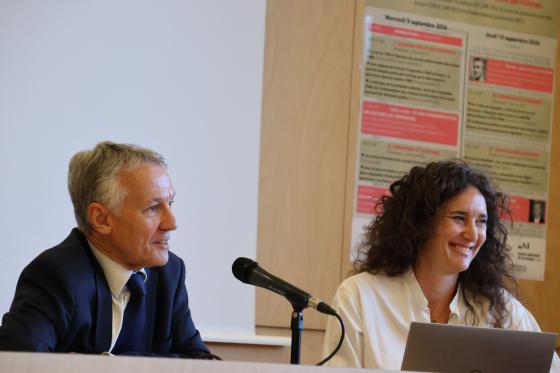
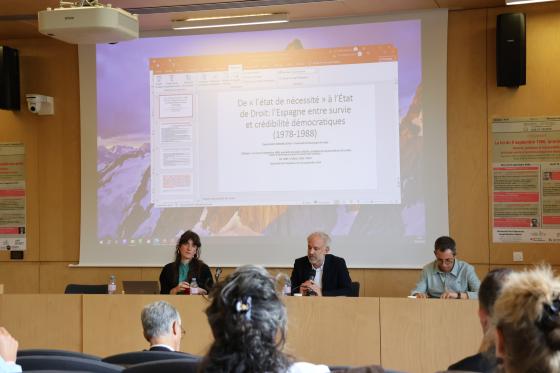
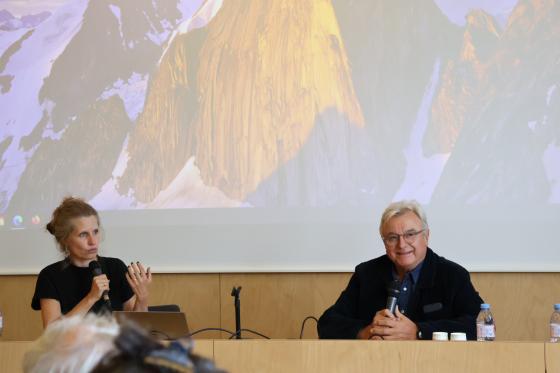
On 9 and 10 September 2026, the Institute for Political and Social Sciences (ISP), the Centre for Research on Social Ties (CERLIS) and the Museum and Memorial of Terrorism organised a conference at the University of Paris Nanterre to mark the fortieth anniversary of the Act of 9 September 1986 on combating terrorism. These two days of presentations and round-table discussions provided an opportunity to trace its origins and development, and to assess its political, cultural and social impact at national, European and international levels.
The first half-day focused on the genesis of the law. Antoine Mégie, senior lecturer in political science at the Rouen University Centre for Legal Studies (CUREJ, University of Rouen Normandy), and Virginie Sansico, a senior lecturer in history at the Catholic Institute of Paris and a member of the Centre for Sociological Research on Law and Penal Institutions (CESDIP), deconstructed the public narrative (both institutional and popular) that presents the Act of 9 September 1986 – and in particular the creation of ‘specially constituted’ assize courts ’ to try acts of terrorism – as a new development arising in response to the Schleicher incident (during the trial of members of Action Directe in December 1986, in which several jurors had to be replaced after being threatened by a defendant), whereas the bill had been under discussion as early as June 1986. They placed the text within the context of the Georges Ibrahim Abdallah case and the political violence of the 1980s. Thomas Maineult, a professor and PhD holder in history at Sciences Po’s Centre for History, situated the law within the security-focused shift of François Mitterrand’s first term, marked by France’s involvement in Lebanon and tensions with Iran.
The issue of compensation for victims of terrorism featured prominently on the agenda. Francesco Nardone, a PhD student in political science at the Centre for European Studies and Comparative Politics (CEE, Sciences Po) and the Maurice Halbwachs Centre (CMH, EHESS/ENS), analysed the creation of the 1986 compensation fund, driven by the campaigning of Françoise Rudetzki, highlighting how compensation practices had gradually stabilised around five principles constituting a ‘normative framework’: liability, fairness, equality, effectiveness and impact on public opinion. The round-table discussion, featuring Jean-François Le Coq, deputy director of the Guarantee Fund for Victims of Terrorism and Other Offences (FGTI), and Cécile Besse Advani, trustee of the Georges Besse Foundation and member of the FGTI’s board of directors, traced forty years of support for victims, identifying a turning point in 2015: the recognition of psychological distress and the consideration of post-traumatic stress.
The subsequent panel broadened the focus to an international and comparative level. Corentin Sire, who holds a PhD in contemporary history (University of Caen-Normandy, HisTeMé laboratory) and in criminology (University of Montreal), traced the origins of the term ‘terrorism’ from the French Revolution to the debates at the UN, revealing a persistent North-South divide. David Aller-Soriano, a qualified teacher and PhD student in history at the Interdisciplinary Research Laboratory ‘Societies, Sensibilities, Care ’ (LIR3S, University of Burgundy-Europe), and Rachel Pougnet, a lawyer and sociologist of law, and a researcher at the Max Planck Institute for the Study of Crime, Security and Law (Freiburg im Breisgau), presented the Spanish and British cases respectively, two distinct trajectories in the legal construction of counter-terrorism. Marc André, senior lecturer in contemporary history at the University of Rouen-Normandy and a researcher at the Institute for the History of the Present (IHTP, CNRS), traced the history of reparations for civilian victims of the Algerian War, who had long been denied recognition (how can one compensate the victims of a war that cannot be named?), and highlighted the connection between the Act of 31 July 1959 and that of 9 September 1986.
The session concluded with a discussion on media coverage: Claire Sécail, a media historian at the CNRS, a member of CERLIS and scientific adviser to the MMT since 2024, spoke on the media strategies of Françoise Rudetzki; Pierre Lefébure, senior lecturer in political science at Sorbonne Paris Nord University, and Émilie Roche, senior lecturer in information and communication sciences at Sorbonne Nouvelle University, both members of CERLIS, on the media construction of the figure of the ‘anti-terrorism judge’, a ‘fighting magistrate’ examined through the cases of Jean-Louis Bruguière and Marc Trévidic.
Several witnesses contributed to these analyses: Jean-Bernard Andro, a doctor and director of the documentary L’Effroi des hommes (1991, Clé d’Or at the Lorquin Festival), on the clinical dimension of trauma; Jean-François Ricard, a former magistrate who joined the anti-terrorism section of the Paris Regional Court in 1994 and served as the first anti-terrorism public prosecutor from 2019 to 2024, heading the National Anti-Terrorism Prosecutor’s Office (PNAT), on the genuine break with the 1986 Act, which, by providing a legal definition of terrorism and enshrining it in the Criminal Code, broke with a conception of terrorism perceived solely as an attack on the fundamental interests of the Nation; and finally Hervé Brusini, a senior correspondent for public service broadcasting and co-winner of the 1991 Albert Londres Prize, on the ethical challenges faced by media professionals confronted with terrorist violence and the difficulty of sometimes reconciling the right to information, journalistic independence and respect for the dignity of victims. Since the 1980s, instances of misconduct have often led to improvements in professional practice.
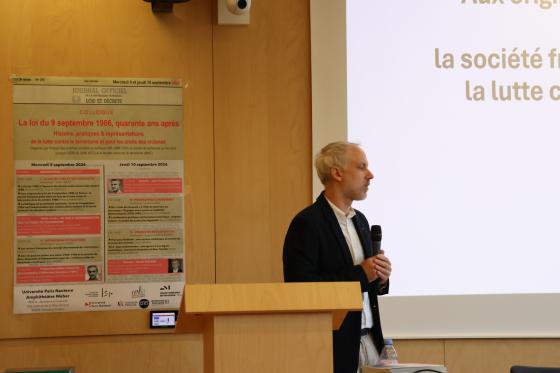
© GIP MMT
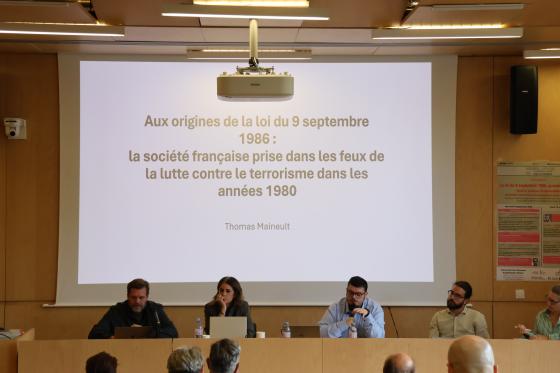
© GIP MMT
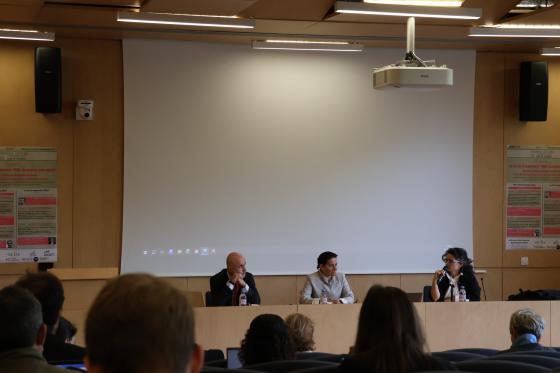
© GIP MMT
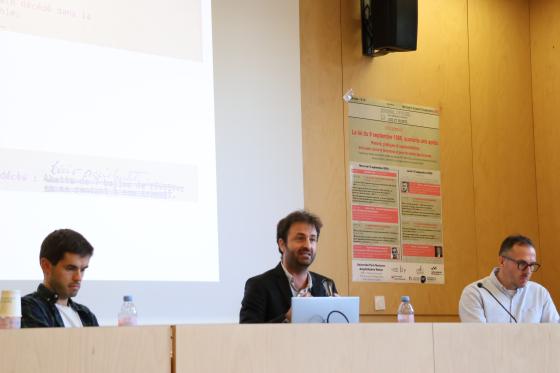
© GIP MMT
© GIP MMT
© GIP MMT
© GIP MMT
Sur le même sujet
Voir le colloque organisé par la Cour de cassation le 25 septembre 2026 et celui organisé le 7 octobre 2026 par le Fonds de garantie des victimes (FGTI) sur le thème "Les victimes et le temps".