

© Rachid Azizi
9/11 as Seen by Artists
Published on
10th September 2026
updated on
14th September 2026
9/11 has had a lasting impact on contemporary art, from novelists to filmmakers, documentary filmmakers, and musicians. This selection brings together French and international works that, each in their own way, have sought to depict the event, examine its imagery, or preserve its memory—ranging from literary fiction to on-screen reenactments to musical tributes. It showcases the diversity of perspectives on that day, twenty-five years after the events.
9/11 as Seen by Writers
© DR
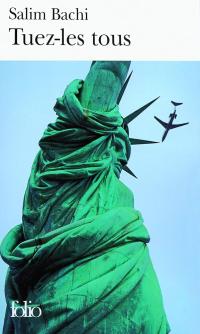
Salim Bachi, Tuez-les tous, Editions Gallimard, 2006.
This novel is told from the perspective of one of the September 11 suicide bombers, recounting his final hours before the attack as he wanders the streets of Boston before boarding the plane that would crash into one of the World Trade Center towers. In it, Salim Bachi explores the psychology and motivations of a terrorist, dissecting the mechanisms of radicalization and alienation at work. This book, which was praised by critics upon its release, also sparked controversy, with some viewing it as a risky attempt to give voice to the perpetrator of the attack.
© DR
Frédéric Beigbeder, Windows on the World, Paris, Editions Grasset, 2003.
This novel weaves together two parallel narratives: that of an American family trapped in the Windows on the World restaurant at the top of the North Tower of the World Trade Center on the morning of September 11, 2001, and that of a French narrator who, from Paris, attempts to write about this event, which he did not experience firsthand. In it, Frédéric Beigbeder explores the limits of fiction in the face of a real-life tragedy, blending a minute-by-minute reconstruction with reflections on the act of writing itself. The book won the Prix Interallié in 2003.
© DR
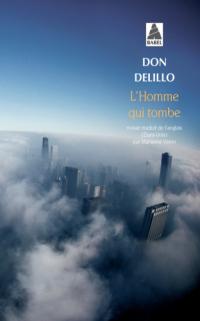
Don DeLillo, L’Homme qui tombe, Paris, Actes Sud, 2010.
This novel follows Keith Neudecker, a World Trade Center survivor, in the months following the attacks, as he tries to reconnect with his ex-wife Lianne and their son. In the background is a performer nicknamed “Falling Man,” who reenacts in public the fall of a man from the towers, reigniting the collective trauma. In it, Don DeLillo explores, in fragments, the effects of 9/11 on memory, relationships, and our relationship with time.
© DR
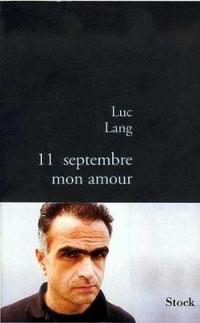
Luc Lang, 11 septembre mon amour, Paris, Editions Stock, 2003.
On September 11, 2001, Luc Lang was in the United States, deep in the heart of Montana, searching for the Blackfeet Indians. While staying on the Browning Reservation, he saw footage on television of the Twin Towers being struck by planes. Having set out to follow in the footsteps of the Indians, he ultimately found an America in a state of shock. An America that was wounded and battered, but also an America sharpening its weapons and plotting its revenge. This book is the account of that week spent at the heart of history.
© DR
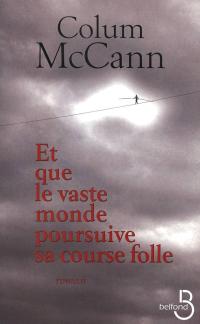
Colum McCann, Et que le vaste monde poursuive sa course folle, Place des Editeurs, 2013.
This ensemble novel takes as its starting point tightrope walker Philippe Petit’s crossing between the twin towers of the World Trade Center on August 7, 1974, to weave together the intertwined fates of an Irish priest, prostitutes from the Bronx, and parents grieving the loss of loved ones in the Vietnam War. Published in 2009, after the September 11 attacks, the book retrospectively imbues the Twin Towers with a symbolic and fragile dimension. It earned Colum McCann the National Book Award.
© DR
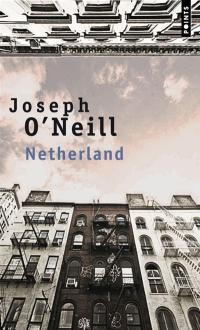
Joseph O’Neill, Netherland, Paris, Editions de l’Olivier, 2009.
In post-9/11 New York, Hans van den Broek, a Dutch financial analyst abandoned by his wife, finds solace in cricket, a niche sport played by an immigrant community. His friendship with Chuck Ramkissoon, a Trinidadian businessman with grandiose plans, opens the doors to a seedy, multicultural New York, far from the office towers. The novel has been praised by Barack Obama, among others.

© DR
Jonathan Safran Foer, Extrêmement fort et incroyablement près, Paris, Editions de l’Olivier, 2006.
One year after his father’s death in the World Trade Center attacks, nine-year-old Oskar Schell discovers a key among his father’s belongings. Convinced that it holds a final message from his father, he sets out to find the lock it fits across New York’s five boroughs. This novel blends a coming-of-age quest, a child’s grief, and typographical experiments.
© DR
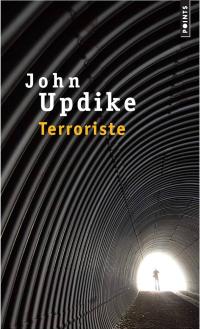
John Updike, Terroriste, Paris, Le Seuil, 2008.
In post-9/11 America, Ahmad Mulloy, an eighteen-year-old high school student born to an Irish-American mother and an absent Egyptian father, turns to radical Islam under the influence of a local imam. Only his guidance counselor, Jack Levy, recognizes the danger and tries to steer him away from it before he gets caught up in a plot to carry out an attack. In this novel, John Updike paints a portrait of an America thrown into turmoil by Islamist radicalization.
9/11 as Seen by Filmmakers
© DR
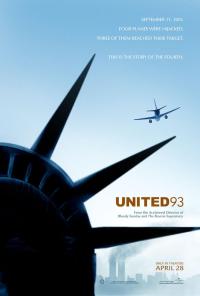
United 93 de Paul Greengrass, 2006, Universal Pictures
A film that recreates the hijacking of United Flight 93 almost in real time.
© DR
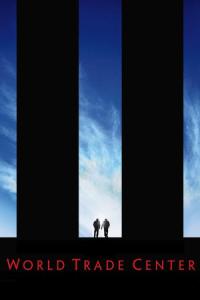
World Trade Center d’Oliver Stone, 2006, Paramount Pictures
A film based on the true story of two police officers trapped under the rubble of the towers and rescued by emergency responders.
© DR
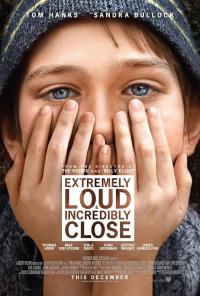
Extremely Loud & Incredibly Close de Stephen Daldry, 2011, Warner Bros
Based on the novel by Jonathan Safran Foer, the film follows a young boy as he tries to come to terms with the loss of his father in the attacks.
© DR
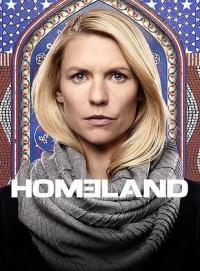
Homeland, Showtime, 2010-2020
An eight-season television series that explores the geopolitical consequences of the September 11 attacks through the eyes of a CIA agent.
© DR
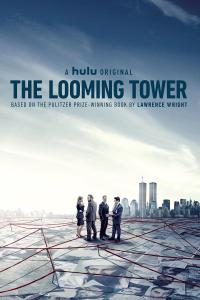
The Looming Tower d’Alex Gibney, 2018, Hulu
Based on the book by Lawrence Wright, the ten-episode miniseries chronicles the rivalry between the CIA and the FBI in the lead-up to the attacks.
© DR
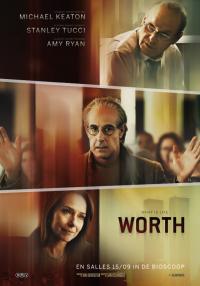
Worth de Sara Colangelo, 2020, Netflix
A film that chronicles the ups and downs of the 9/11 Victims' Compensation Fund.
9/11 as Seen by Documentary Filmmakers
9/11, a documentary directed by Jules and Gédéon Naudet, 2002, Goldfish Pictures and Silverstar Productions
The only footage of the first impact and the interior of the North Tower, featuring New York firefighters, taken as part of a documentary then being filmed about their work.
The Falling Man, a documentary by Henry Singer, 2006, Darlow Smithson Productions
The documentary traces the history of reporter Richard Drew’s famous and controversial photograph showing a man falling from the North Tower of the World Trade Center—an exploration of collective memory, grief, and the ethical dilemmas surrounding the public depiction of death.
September 11: A Day in History (9/11: One Day in America), a documentary by Daniel Bogado, 6 episodes, 2021, 72 Films
In collaboration with the 9/11 Memorial and National Geographic, this six-episode series recounts that traumatic day in minute detail using archival footage and previously unseen testimonies 20 years after the events. One of the most powerful and moving accounts ever made about these attacks.
9:59 a.m., New York, 20 Years Later, a documentary by Olivier Ponthus, 2021, Public Sénat
A French-language documentary aired on Public Sénat to mark the 20th anniversary of 9/11.
Rebuilding Hope: The Children of 9/11, HBO, 2021
A documentary following children born after their fathers’ deaths on September 11, 2001, and exploring what it means to be an orphan twenty years after the terrorist attacks.
Turning Point: 9/11 and the War on Terror (2021) and Turning Point: Generation 9/11 (2026), Netflix
Two series that trace the “war on terror” launched after the September 11 attacks and the 25th-anniversary commemorations, through the perspectives of survivors, orphans, and public figures.
“USA: The Double Burden of 9/11 Survivors,” Arte Reportage, 2021
A French-language documentary on the physical and psychological trauma endured by 9/11 survivors, still felt 20 years later.
9/11 as Seen by Musicians
© DR
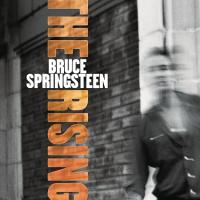
The rising, Bruce Sprinsgteen, 2002, Columbia Records
On September 11, 2001, moments after the attack on the World Trade Center, Bruce Springsteen, who lives in New Jersey, went to a beach near his home to watch from a distance as chaos engulfed the city he had been singing about for nearly forty years. A passerby recognized him there and called out, “Bruce, we need you.” This brief exchange would leave a lasting impression on the artist, who was then considered one of the leading chroniclers of American society and a spokesperson for the working class.
Upon returning home after this encounter, Springsteen quickly composed several songs inspired by the attacks. This was the first time in his discography that he devoted a significant portion of an album to a specific event, addressing it not only as an American observer but also from a broader, more global perspective.
The album The Rising was released on July 30, 2002. It features tracks such as Into the Fire, Empty Sky, Worlds Apart, You’re Missing, The Rising, and My City of Ruins, which address the event from various angles: a tribute to New York’s firefighters, the pain of loss, New York City marked by the destruction of one of its symbols, the quest for resilience, and the bringing together of peoples. On the track Worlds Apart, Springsteen incorporates Middle Eastern sounds for the first time, featuring Pakistani qawwali singer Asif Ali Khan.
© DR
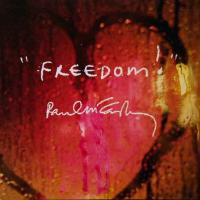
Freedom - Paul Mc Cartney, 2001, Parlophone/Capitole
On September 11, 2001, Paul McCartney was in New York and witnessed the attacks on the Twin Towers. Deeply moved, he quickly composed “Freedom,” a song that proclaims the right to freedom as a cause worth fighting for and celebrates unity in the face of adversity. The song, performed for the first time at the Concert for New York City on October 20, 2001, appears on the album Driving Rain.
© DR
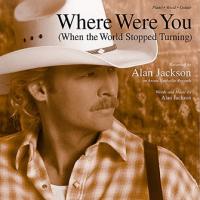
Where Were You - Alan Jackson, 2011, Arista Nashville
Where Were You (When the World Stopped Turning) was written by Alan Jackson in the weeks following the attacks. First performed at the Country Music Association Awards on November 7, 2001, and later released as a single that same year on the album Drive (2002), the song asks everyone what they were doing and how they were feeling on that day. The song won the Grammy Award for Best Country Song as well as the CMA and ACM Song of the Year awards.
© DR
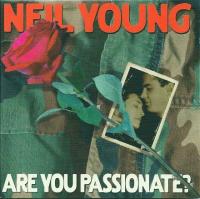
Let's Roll - Neil Young, 2001, Reprise Records
“Let's Roll” written and released as a single by Neil Young in December 2001, pays tribute to Todd Beamer and the other passengers on United Airlines Flight 93, who attempted to regain control of the plane before it crashed in Pennsylvania. The song later appeared on the album Are You Passionate? (2002). Composed in haste, it echoes the rallying cry attributed to Beamer just before the passengers intervened.

© DR
Manhattan-Kaboul - Renaud et Axelle Red, 2002, Virgin Records
Performed by Renaud and Axelle Red in 2002 on the album Boucan d'enfer, the song draws a parallel between the fate of a victim of the September 11 attacks in New York and that of a young Afghan girl caught up in the war that followed. Performed by the duo, the song connects two tragedies that are geographically distant but united by the same violence. Twenty years after its release, it remains one of the French songs most closely associated with 9/11.
© DR
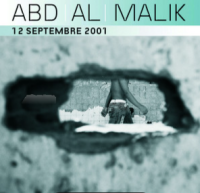
12 septembre 2011 - Abd-Al-Malik, 2004, Atmosphériques/Universal
Featured on the album Le Face-à-Face des cœurs (2004), this song is Abd Al Malik’s account of the aftermath of the September 11 attacks and the subsequent conflation, in the West, of Muslims with terrorists. In it, the rapper offers a personal and spiritual reflection on the world after the attacks, exploring the question of meaning in the face of violence.
© DR
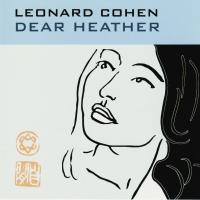
On that Day - Leonard Cohen, 2004, Columbia Records
“On That Day,” from the album Dear Heather (2004), is Leonard Cohen's direct response to the September 11, 2001, attacks. The song takes a questioning rather than a narrative tone, ending with a question posed to the listener about their own reaction to the event. Written three years after the attacks, it reflects a more detached perspective than that of works written in the immediate aftermath.
© DR
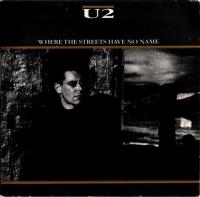
Where the Streets Have No Name - U2, 1987, Island Records
During the Super Bowl on February 3, 2002, U2 performed Where the Streets Have No Name (a 1987 song, released before the attacks) to close out their halftime show. As the song played, the names of the 2,977 victims of 9/11 scrolled across the screen behind the band, before Bono revealed an American flag sewn into the lining of his jacket. This moment, which remains one of the most memorable televised tributes to the victims, has permanently linked the song to the memory of 9/11, even though it was not written about that event.
Rendez-vous
À l'occasion de la 29ᵉ édition des Rendez-vous de l'histoire, du 7 au 11 octobre 2026, à Blois, le Musée-mémorial du terrorisme, en partenariat avec le 9/11 Memorial and Museum, propose une discussion sur la postérité de cet événement à l’échelle mondiale, et plus généralement sur la représentation de la violence terroriste. L’accent est mis sur la dimension culturelle du souvenir, en particulier la conception de mémoriaux et de musées, et la réalisation de films et de séries. Ces créations connaissant un grand succès auprès d'un large public. Elles sont un élément essentiel de la construction d'une mémoire longue de l'événement.
Dossier spécial
Voir aussi :