

© GIP MMT
From Lisieux to Brussels, from Strasbourg to Sceaux: the MMT at the heart of the transmission of memory
Published on
6th May 2026
updated on
23rd June 2026
During March and April 2026, the educational department of the Museum and Memorial of Terrorism (MMT) organized and conducted several sessions in schools as part of an effort to raise students’ awareness of the historical, commemorative, and civic issues related to terrorism.
From the Marcel Gambier School Complex in Lisieux to the Lycée Charlemagne in Paris
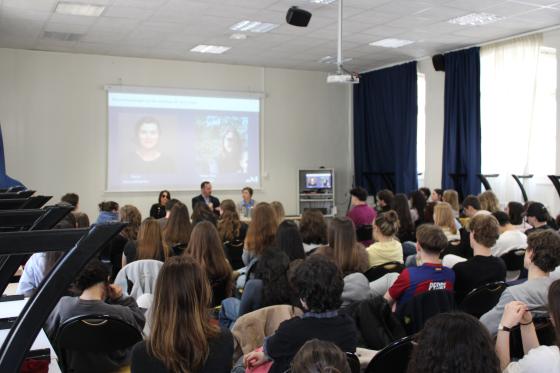
On March 10, 2026, as part of the National Day of Remembrance for the Victims of Terrorism, Lancelot Arzel, head of the educational department, spoke to students in the HGGSP (History, Geography, Geopolitics, and Political Science) senior class. This event brought together two classes that had traveled specifically from the Marcel Gambier School Complex in Lisieux, as well as a class from the Lycée Charlemagne, located in Paris’s 4th arrondissement, which hosted the event. The session provided an in-depth presentation of the historical, commemorative, and civic issues addressed by the the Museum and Memorial of Terrorism's project. On this occasion, two victims shared particularly powerful testimonies, recounting both their personal journeys and the objects they had entrusted to the MMT.
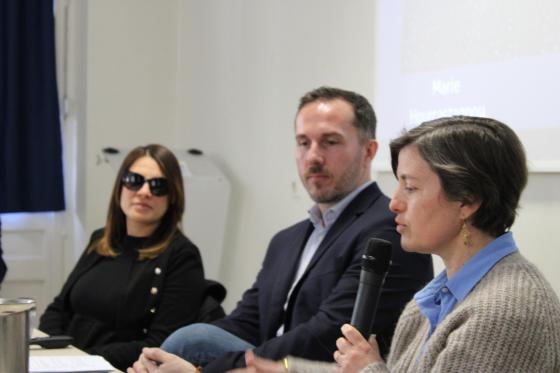
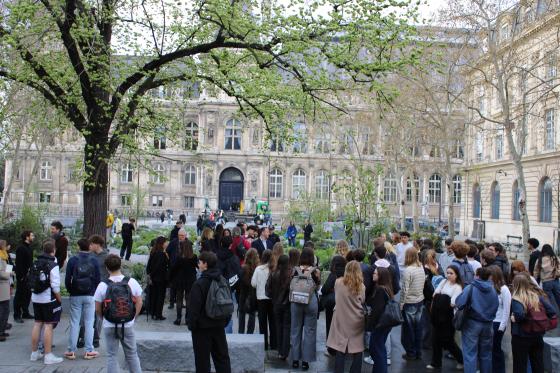
Marie Hourcastagnou, a survivor of the Bataclan attack, spoke about the cell phone she had been carrying during the hostage-taking carried out by the terrorists. For her part, Hager Ben Aouissi, a survivor of the Nice attack, presented a carnival mask made by her daughter Kenza, designed as a way to express and give form to the psychological trauma caused by the event. The discussions, fueled by numerous questions from the students, provided an opportunity to explore the development of a culture of remembrance in France, marked both by the commemorations of November 13 and the upcoming commemorations of the Nice attack. Following this meeting, the students and their teachers visited the 13-November Garden, located on Place Saint-Gervais behind Paris City Hall, where they laid white roses on the granite blocks symbolizing the six sites of the attacks, before observing a minute of silence in tribute to the victims of terrorism.
From Strasbourg to the Paris Courthouse
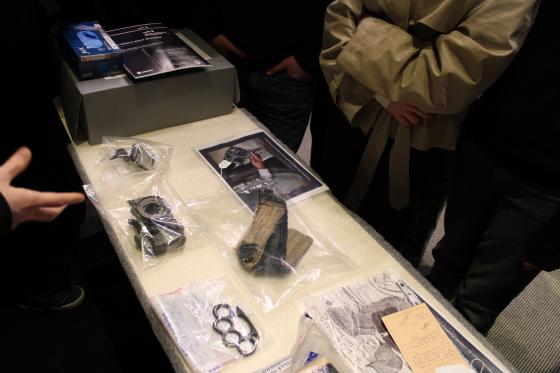
Additionally, in collaboration with the French Association of Victims of Terrorism (AfVT) and at the initiative of the association Des larmes au sourire, the educational division organized a visit to Paris for a class from the Sophie Germain Middle School and a class from the René Cassin Vocational High School in Strasbourg on March 31, 2026. Gathered in the auditorium of Paris City Hall, these students, accompanied by their teachers, attended a presentation on the future museum led by Lancelot Arzel, while the Collections Department introduced them to several objects collected or entrusted to the MMT. Elisabeth Pelsez, the museum’s director general, also spoke to explain how the counterterrorism justice system works, prompting numerous questions from the students, which fueled the afternoon’s discussions.
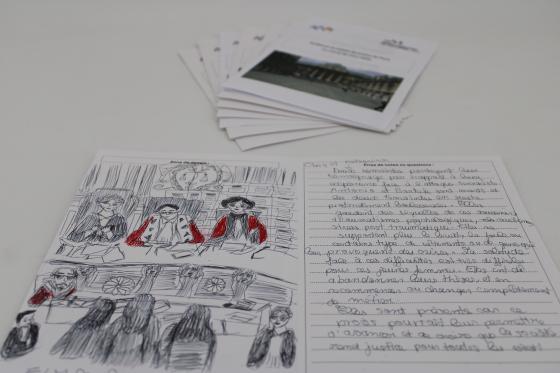
Later, the students were welcomed at the Paris Courthouse to attend the hearing of civil parties as part of the appeal trial for the Strasbourg Christmas market attack on December 11, 2018. These particularly poignant testimonies inspired the students to engage with the material in various ways, notably through drawings and note-taking.
At the French High School in Brussels
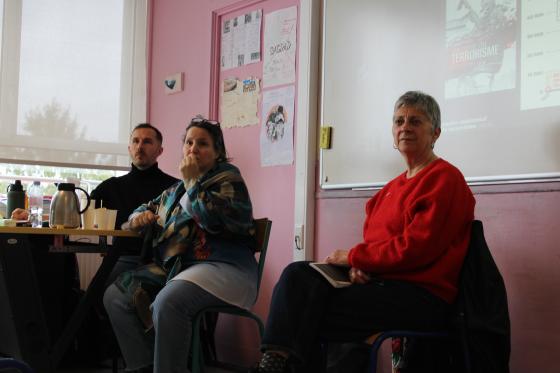
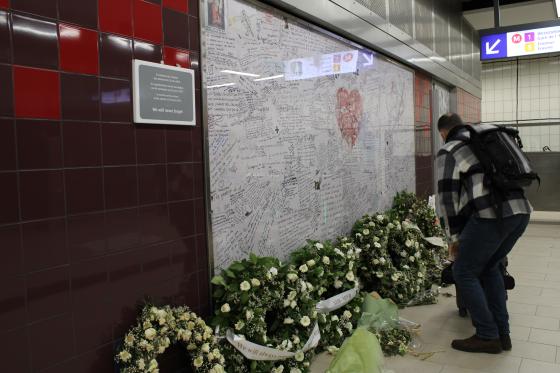
On April 3, 2026, a teacher of moral and civic education at the French High School in Brussels reached out to the MMT to organize a meeting in connection with the commemorations of the attacks that took place in the Belgian capital on March 22, 2016. For this session, the educational division invited two speakers: Sophie Pirson, the mother of a survivor of the Maelbeek attack, and Fatima Ezzarhouni, the mother of a jihadist who died in Syria. Both women shared with the students how, in the wake of the March 2016 attacks, they became involved in efforts to prevent radicalization, driven by a desire to “repair something in this fractured world.” Their testimonies—some of which were partially transcribed in the book Couvrez-les bien, il fait froid dehors… Conversations with Fatima Ezzarhouni, published in 2021, as well as their involvement with the organization Retissons du lien, helped highlight the importance of terrorism-related trials, the role of restorative justice, and the efforts needed to keep the memory of the Brussels attacks alive among younger generations.
At Lakanal High School in Sceaux
On April 14, 2026, Henry Rousso, president of the MMT, in collaboration with the school’s educational department, spoke to two senior-year HGGSP classes and one HLP (Humanities, Literature, and Philosophy) class at Lakanal High School in Sceaux: this lecture, titled “A Terrorism Memorial Museum… What’s the Point? ,” sparked numerous questions about the role of victims, current issues related to terrorism (cyberterrorism and hybrid warfare, state-sponsored terrorism), and the paths to radicalization.
With teachers at the Gabriel Fauré School Complex in Paris
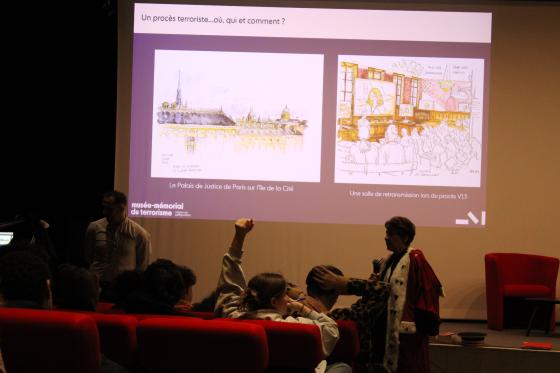
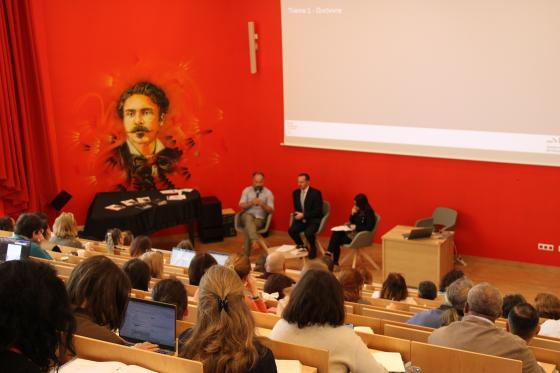
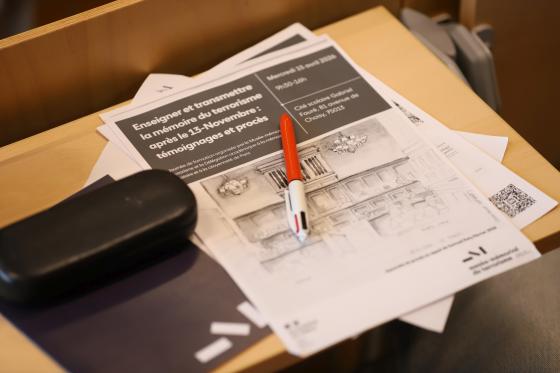
Finally, on April 15, 2026, the MMT’s educational division organized, in partnership with the Paris Academic Delegation for Memory, History, and Citizenship—represented by Olivier Dautresme—a training day for National Education staff. The event took place in the auditorium of the Gabriel Fauré School Complex, in Paris, and was titled “Teaching and Passing On the Memory of Terrorism After November 13: Testimonies and Trials.” The goal of the event was to provide both scholarly insights and educational tools for addressing the issue of terrorism with students, ten years after a series of major attacks in France. The first roundtable brought together two survivors, Arthur Dénouveaux, a representative of the association Life for Paris, and Hager Ben Aouissi, an activist with the association Une Voie des Enfants, who shared their personal journeys following the attacks of November 13, 2015, and July 14, 2016, in Nice, as well as their involvement in community, memorial, and public initiatives. A second roundtable featured Chantal Anglade, a representative of the French Association of Victims of Terrorism, who presented the educational initiatives developed by the association to support teachers, particularly through the organization of meetings between victims and students. On this occasion, Hugo Drapier, a teacher of history, geography, and “Law and Major Issues of the Contemporary World” (DGEMC), outlined the projects he has implemented at his school since 2020, drawing on the resources and experience of the AfVT, particularly regarding trials related to terrorism. Finally, the last roundtable brought together Jean-Louis Périès, presiding judge of the November 13 trial (known as “V13”), and historian Sylvie Lindeperg, who was involved in filming the proceedings. Their joint presentation sparked an in-depth discussion on the functions and meanings of the images produced during this trial, on the creation of audiovisual archives, and on the limitations and challenges of such a system.
Download the program (in French only):
© GIP MMT
© GIP MMT
© GIP MMT
© GIP MMT
© GIP MMT
© GIP MMT
© GIP MMT
© GIP MMT
© GIP MMT
© Académie de Paris