

© GIP MMT
The MMT has made its first loan of an item from its collections
Published on
21st July 2026
updated on
9th September 2026

© Collections du GIP MMT
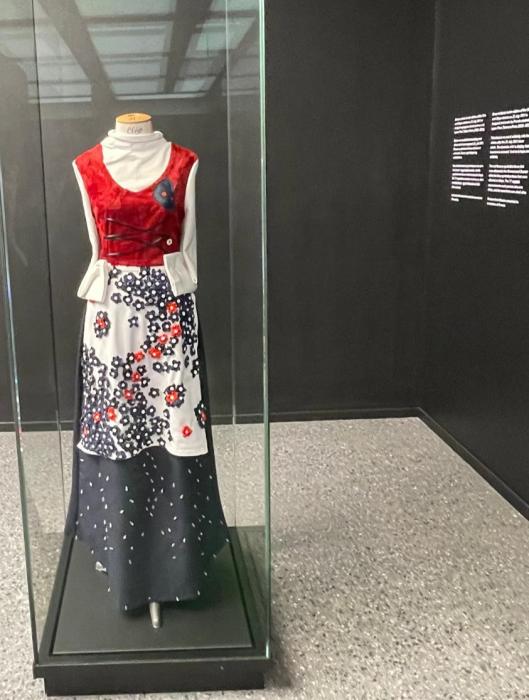
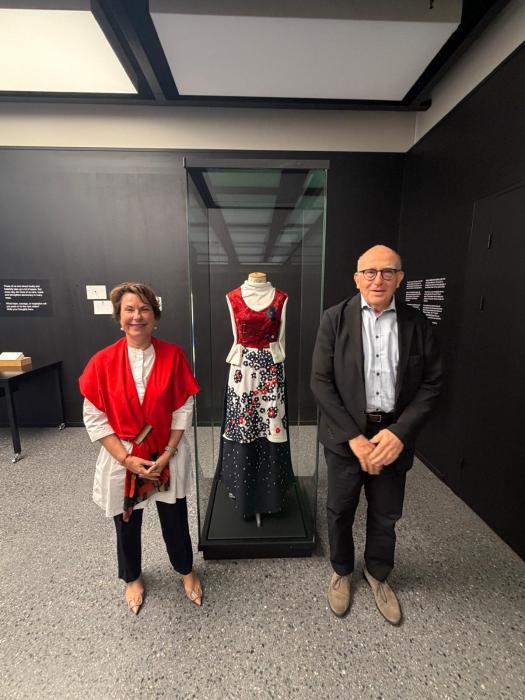
For the first time, the Museum and Memorial of Terrorism (MMT) is lending an item from its collections to a foreign institution. This is a Norwegian dress on loan to the July 22 Center in Oslo (22. juli-senteret), where it will be on display as part of the permanent exhibition through 2030.
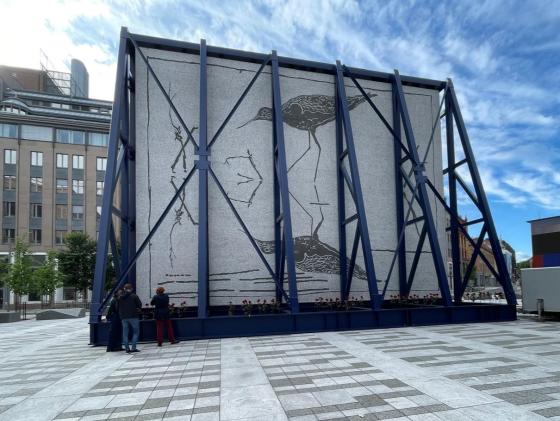
This loan coincides with the opening of the 22 July Center’s new site, fifteen years after the July 22, 2011, attacks that struck Oslo’s government district and the island of Utøya.
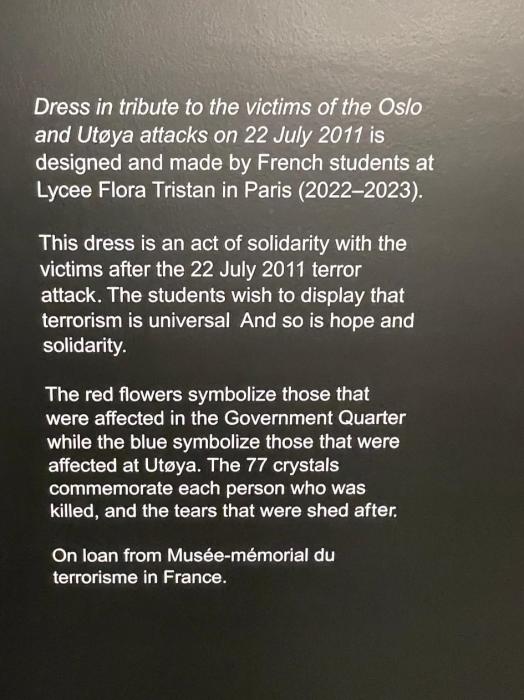
Created in 2023 by students at a vocational high school in the Île-de-France region, this dress pays tribute to the victims of the July 22, 2011, attacks. Its embellishments, inspired by Norwegian folklore, carry the work’s symbolic meaning: a piece of blue leather shaped like the island of Utøya and a white motif evoking Oslo, both marked at their center with a dot signifying that the two locations struck by the attacks were targeted. The apron features 215 embroidered flowers, echoing the “Flower Marches” organized in Norway in support of the victims, including two golden leather pistils sewn on by survivors of other attacks who came to speak with the students. The petticoat features 77 teardrop-shaped glass beads, one for each person killed in 2011. The dress was presented to the Norwegian ambassador to France as well as to the director of the July 22 Center in Oslo.
“This first loan holds special significance: it reflects our conviction that the memory of terrorism is not shaped in isolation, but is built through dialogue among the institutions responsible for it. By entrusting this dress to the July 22 Center, the MMT affirms its commitment to making its collections available to foster a shared memory that extends far beyond France’s borders."
Elisabeth Pelsez, Executive Director of the MMT
This loan is part of the collaboration that has been underway for several years between the MMT and the July 22 Center, one of the international partners with which the museum-memorial regularly exchanges views on issues of memory, transmission, and museography related to terrorism.
“When artifacts are shared between institutions, they help forge connections between different histories and different audiences. They allow visitors to recognize shared human experiences that transcend borders and remind us that memory is both local and international. These exchanges also reflect the trust between institutions and a shared commitment to preserving authentic narratives for future generations.”
Lena Fahre, director of the July 22 Center.
This loan also illustrates the MMT’s mission to have its collections circulate beyond its own walls—even before the museum opens—to support the remembrance efforts of other institutions dealing with comparable events.
“Remembering Terror – Memory, Responsibility, and the Future ”
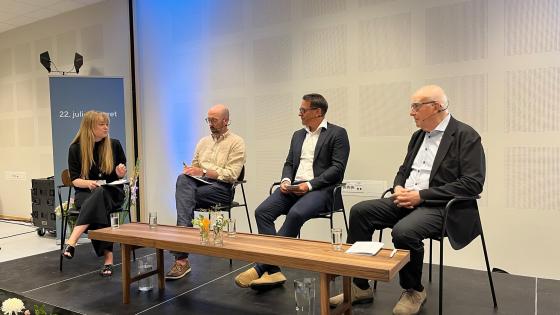
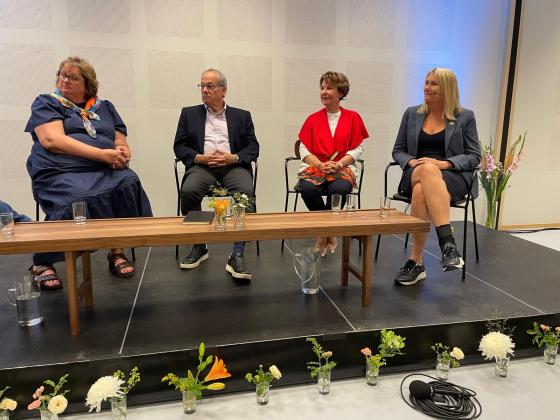
To mark the opening of its new permanent exhibition, the July 22 Center organized a seminar titled “Remembering Terror – Memory, Responsibility, and the Future,” attended by renowned researchers and representatives of memory institutions in Norway, the United States, and France, focusing on the themes of terrorism, learning, and prevention.
This seminar highlights what research is teaching us today about terrorism, how the threat has evolved, and what experiences memory institutions around the world have gained through their work to convey history, strengthen democracy, and prevent violent extremism.
- Programme
Introduction: What do we know about terrorism and its current trends?
- Lena Fahre, July 22 Center (Norway).
- Anders Ravik Jupskås – Director of the C-REX Center, University of Oslo (Norway).
- Cathrine Thorleifsson – Associate Professor, University of Oslo (Norway).
- Alexandre Dessingué – Professor, University of Stavanger (Norway).
- Henry Rousso – Emeritus Research Director at the CNRS and President of GIP MMT (France).
Lessons Learned from International Practices
- Lena Fahre, July 22 Center (Norway).
- Cliff Chanin, National September 11 Memorial & Museum (United States).
- Kari Watkins, Oklahoma City National Memorial & Museum (United States).
- Elisabeth Pelsez, Museum-Memorial of Terrorism (France).
Conclusion: Jarle Sundve, Head of the Education Department, July 22 Center (Norway).
Videos of the debates are available on the July 22 Center's website.
Photos
© GIP MMT
© GIP MMT
© DR
© GIP MMT
© DR
© DR