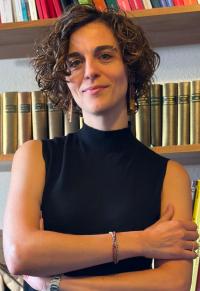
Marion Fellrath has just published *Quand la classe devient une aventure* (When the Classroom Becomes an Adventure) with Le Passeur. In it, she reflects on a project she carried out with a Year 6 class on the topics of terrorism and Syria, whilst highlighting the importance of initiatives aimed at primary schools within the future Museum and Memorial of Terrorism.
MMT - To begin with, could you tell us about your career path and your experience as a teacher, from primary school to your current role as a PhD student and research assistant at the University of Geneva?
Marion Fellrath - I began teaching in 2015, in priority education neighbourhoods and networks, first in Strasbourg, in a REP+ area, and then in Paris, particularly in the Belleville neighbourhood. These are areas where academic difficulties are often linked to severe social deprivation, which in turn gives rise to other problems.
It’s sometimes a bit sad to say, because you go there knowing that the social ladder is broken. Numerous studies show this, and the children know it too, in a way. But school then becomes a true embodiment of republican values, present in everyday life. We sometimes feel like Don Quixotes fighting against forces far greater than ourselves. On our own small scale, we obviously cannot right all the injustices in society. However, in the classroom, we hold to this ideal of access to knowledge for everyone.
That’s what I really liked: I felt there was a real intensity in the relationship with knowledge, with a great deal of hope and determination. In particular, I supported pupils who had recently arrived in France and were learning French, and you could really feel the school’s mission in a very tangible way.
Then, for personal and family reasons, I moved to Switzerland and took up an opportunity at the University of Geneva to write a PhD thesis in educational sciences. This now allows me to examine and analyse this profession that I love and which I practised for around ten years. My thesis focuses on gender issues and how knowledge can be constructed differently depending on the pupils’ gender. In particular, I am looking at teaching practices: instructions, the exercises set and the interactions between teachers and pupils.
MMT - At what point did the issue of terrorism become part of your teaching practice? How had your 10–11-year-old pupils been confronted with it before the project we are about to discuss?
Marion Fellrath - Terrorism is a concept that, ideally, one would not necessarily have dreamed of discussing with one’s pupils. But, in reality, it finds its way into schools despite ourselves.
Firstly, through the intrusion alerts linked to the Vigipirate security plan. These can be very distressing for children, who understand – even without having directly experienced the attacks – why these protocols exist. Then there were the murders of Samuel Paty and Dominique Bernard. For the pupils, this was particularly difficult: they would return to class saying, ‘A teacher has been killed’ and might ask, ‘Could something like that happen to you too?’ ’ At the age of 10 or 11, children see their teacher as a role model: these are the adults who are supposed to keep them safe during the day. These events therefore completely shattered their sense of invulnerability.
There was also all the information circulating on social media, particularly regarding Islamic State. Children would sometimes arrive in class with videos or questions on the subject. School must remain a safe haven, but it cannot cut itself off from the outside world.
In the face of this, our main tool remains knowledge. Understanding and analysing terrorism obviously does not prevent fear, but it does allow us to gain some perspective. This is how this issue gradually became part of my teaching practice, before becoming truly central to the project involving the Syrian pen pals.
MMT - Let’s turn, then, to the book When the Classroom Becomes an Adventure. In it, you describe the implementation of project-based learning in a Year 6 class in a REP area. One of the chapters is devoted to the project carried out with Lara Scarlett Gervais, president of the association *Héritage & Civilisation*. Could you tell us more about how it came about, particularly in the context of the war in Syria?
Marion Fellrath - The project first arose from the experience of Lara Scarlett Gervais, a traveller and committed photographer, who had travelled to Syria and, in particular, had helped with the evacuation of the Palmyra Museum. She had seen first-hand the extent to which heritage and culture could be targeted by terrorist groups. She returned with the idea of connecting the Syrian children she had met – who had known nothing but war – with other children around the world, so that they could exchange ideas and become agents of peace themselves. This was the purpose of the association she founded in 2017, Héritage & Civilisation.
I was immediately won over by this idea and enrolled my pupils in the programme. We had pen pals from Syria, Russia, Tunisia and several other countries. This fitted in perfectly with my way of working: I liked the class to experience adventures – not just imaginary ones, but real human connections too.
It was particularly interesting in my classes in Belleville, where I might have pupils from nearly twenty different nationalities. So we began by exploring our own heritage and our local environment, before discovering those of others.
One day, the pupils asked me what the places where their pen pals lived looked like. When we typed ‘Damascus, Syria’ into Google Images, we mainly came across photos of ruins. They then started asking lots of questions about the war. I felt I didn’t have all the answers. So I told them: ‘I don’t know, but other people know better than I do. We’re going to find someone who can answer your questions.’
That’s how I got in touch with Nicolas Hénin. He eventually agreed to come and speak directly with the children. We put a lot of preparation into this meeting, focusing in particular on his life story and his comic book *Haytham, a Syrian Youth* [co-created with the illustrator Kyungeun Park in 2016]. I had deliberately avoided mentioning his experience as a hostage, because I was afraid it might spark a kind of morbid fascination that would overshadow the main point of his message. He didn’t mention it either.
Instead, the discussion centred on his life story and the deep love he felt for Syria. I found it remarkable, given his experiences, to see him explaining to children just how welcoming Syrians were and defending the values of justice, democracy and peace amongst peoples.
MMT - So, with children aged 10–11, you don’t necessarily tackle the issue of terrorism head-on. What teaching resources can be used to discuss this with ten-year-olds?
Marion Fellrath - This is precisely where I hope your museum can make a significant contribution, because, to be honest, there are very few resources available. It’s very complicated. We may receive official guidance when an attack has just taken place: we must talk to the pupils about it, explain what has happened, and discuss this or that event. But, apart from a few official resources, we don’t really have any suitable tools. And above all, there are very few for primary schools. We’re somewhat overlooked.
We cannot tackle certain events head-on, but neither can we hide the reality from children. They have access to information and know that terrible things have happened. However, when their questions become too persistent, we can tell them: ‘At your age, there’s no need to go into all those details, because it can be traumatic’. We can leave it at that and try to understand things in a different way.
So my project included the comic strip, but also face-to-face meetings. For me, these meetings are a bit like a wild card. Personal accounts are sometimes what work most effectively. History and geography teachers know this very well: when they can organise meetings as part of the duty to remember, they often invite former deportees, war veterans and so on. These encounters enable learning in an extremely direct and simple way. Of course, it depends on the person you meet, but it also helps to get round the problem of teaching materials that we don’t necessarily have.
MMT - Our museum actually offers a family tour, with resources tailored to children aged 8 to 12. So you’re highlighting not only the challenge for teachers when a terrorist attack occurs, but also the challenge of remembrance and the challenge of educational projects.
Marion Fellrath - Yes, and I think it’s vital not to be afraid of complexity, even with 10-year-olds. They enjoy complexity and nuance. We sometimes get the impression that making things accessible or adapting to children means simplifying matters or being a bit crude in our analysis. But that’s not the case at all.
The discussion they had with Nicolas Hénin was of real quality and substance. Many of them had really immersed themselves in the history of Syria and had managed to understand certain things, particularly the shock caused by the war.
So I think we should do this because children are capable of it, provided we regard them as capable of understanding complex issues. It’s also easier when the subject resonates on a local or human level.
I have sometimes had pupils grappling with this sort of subject who were barely 10 years old and who had certainly seen propaganda videos. Some felt their religion was under attack and might make comments condoning terrorism, without really understanding what they were doing. At the age of 10, my role is not simply to tell them, ‘Be careful, what you’re doing isn’t legal’, and then to rein them in. We need to explain to them why certain comments or actions are forbidden, but above all we must not let them become trapped in misconceptions.
In one specific case, a pupil had refused to read the commemorative plaque dedicated to the children deported from the school because he had seen videos online containing anti-Semitic remarks. The right approach was to ask him: ‘All right, what did you see?’, then go through the content with him and gradually deconstruct what he had seen. Eventually, during a ceremony attended by a local MP, this child was the one who wanted to read out all the names, and it was a very moving moment.
At the age of 10, children are still very impressionable. So we mustn’t give up on this space under any circumstances. If we are afraid of these topics or feel uncomfortable, other people will step in to take our place. It is also a form of media and information literacy from a very young age, which is essential to enable children to take a step back when faced with videos and content they may encounter on social media.
MMT - We might also consider teaching empathy, particularly when it comes to meeting victims or working with personal accounts. Can this be beneficial from a very young age?
Marion Fellrath - I find this question all the more interesting given that we’re always treading a very fine line when it comes to empathy. It enables children to connect with another person, and I completely agree that we need to work on this. However, with children of this age, it shouldn’t be solely about empathy: understanding is also essential.
I therefore believe that empathy is a gateway. After that, emotion must serve a purpose and foster knowledge. I think that is exactly what your museum will do. The aim is not to resort to pathos, as is sometimes the case in the media. It is about ensuring that emotion serves a purpose: understanding, knowledge and reflection.
MMT - You mentioned that primary school teachers are somewhat ‘overlooked’ when it comes to teaching resources. In your view, is there a genuine need for resources tailored to primary school pupils?
Marion Fellrath - The tricky thing is that this isn’t a subject covered in the history syllabus. However, within the context of moral and civic education, anything relating to commemorations can be included. In the case of Samuel Paty, for example, we are asked to organise commemorations.
In primary schools, we often find ourselves in the same situation when it comes to ‘controversial issues’: resources are designed for secondary schools because these topics are complex, and it is assumed that they are not accessible to primary school pupils. I am convinced the opposite is true.
Otherwise, teachers are left to their own devices. The tribute to Samuel Paty, for example, is organised in many schools, but some teachers do not do so because they do not know how to go about it or because the subject seems too difficult to them. And, for us teachers, the case of Samuel Paty is particularly sensitive. We were all afraid. We feel a knot in our stomachs when we talk about him, because this event has left a lasting mark on our profession.
I therefore believe there is a real opportunity here. It is by engaging in dialogue with organisations such as this museum that we will be able to develop a thorough discussion between education professionals and those specialising in remembrance.
We need to be able to consider these issues calmly, without being constrained by institutional or political directives. Given their complexity, we must take the time to reflect on what we are doing and how we are doing it.
We are also seeing that more and more pupils are taking part in the Samuel Paty Prize, including primary school pupils. It took a long process to encourage primary school teachers to get involved, but we are realising that it is entirely possible to work on these issues with young pupils.
MMT - Looking back, what have you learnt from this experience as a teacher? And what impact has this project had on your former pupils?
Marion Fellrath - The impact of these meetings on my former pupils has been particularly profound. Those I bump into still talk to me about it, sometimes several years later. In fact, they often link the knowledge they’ve gained to the person they met. This is a sign that these exchanges have truly left a lasting impression.
For my part, this experience moved me deeply. It was one of the first meetings I organised in class, and I discovered that there were many people willing to give up their time to share their expertise with children.
All too often, the media tends to portray a caricatured or disparaging image of pupils at schools in REP areas. Of course, there are many challenges, but that does not detract from their intelligence. They are passionate and fascinating children. And none of the people who came into my class were under any illusions; they, too, had a great deal of respect and esteem for the pupils they met there.
That is why I believe we must continue to invite people into the classroom who wish to share their knowledge and experience with the pupils, right from primary school onwards.
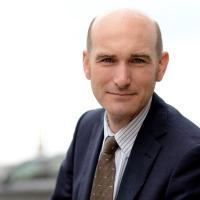
"At the end of 2021, I was contacted by a teacher who wanted me to speak to her pupils. This was nothing new for me, as I’m used to talking about my career as a war correspondent. Except that this teacher was Marion Fellrath. Her pupils were in a Year 6 class at a school in a Parisian REP area, and they weren’t used to having their horizons broadened.
The initial challenge was as simple as it was daunting: how do you explain concepts such as war, dictatorship or terrorism to primary school children? How could we encourage them to take an interest in current affairs and the modern world? You’d be surprised by the intelligence of their questions, as well as their eagerness to learn more and to seek out more complex explanations. I myself was surprised by their moral compass, their ability to recognise injustice and their determination to speak out against it.
The result was such a magical experience that Marion decided to turn these encounters into a book, with me and a host of other contributors—as prestigious as they are diverse—whom I now have the honour of working alongside.
Thank you to Marion. She has one of the finest jobs in the world, and she does it well."