

© Sébastien Bozon / AFP
Training the Educational Community on Terrorism: A Training Day in Mulhouse
Published on
22nd June 2026
updated on
6th July 2026
The Education Department of the Museum and Memorial of Terrorism (MMT) develops a wide range of training programs for the educational community—teachers of all subjects, administrators, and educational staff—to deepen understanding of the phenomenon of terrorism. These training programs draw on presentations by researchers in the humanities and social sciences, as well as testimonies from key witnesses.
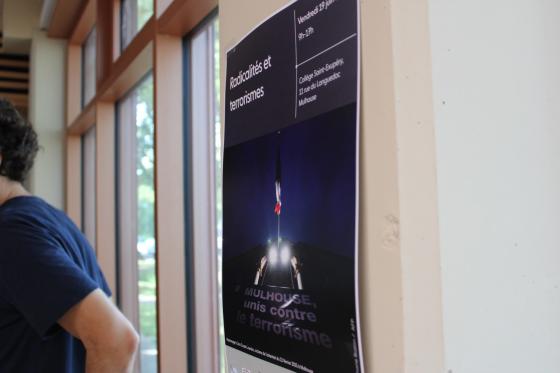
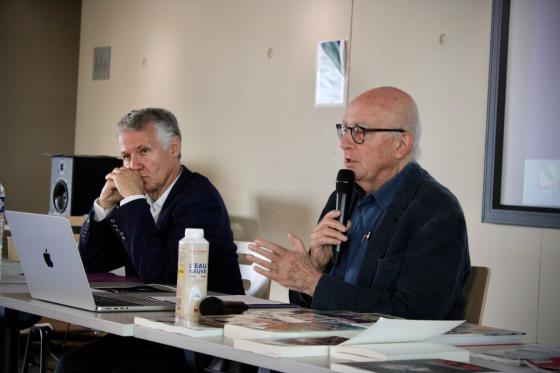
On Friday, June 19, 2026, Lancelot Arzel, educational director of the Museum and Memorial of Terrorism, Romain Blandre, a history and geography teacher and regional correspondent for the Shoah Memorial and Didier Burcklen, a history and geography teacher, co-organized a training day at Saint-Exupéry Middle School in Mulhouse, in partnership with François-Villon Middle School. This event was part of the training series “Critical Thinking and the Values of the Republic in the Face of Sensitive Issues,” conducted during the 2025–2026 school year for teachers, administrators, and educators at both schools. It received support from the Strasbourg School District, the Ministry of Justice, the European Center for Deported Resistance Fighters at Struthof, and the Shoah Memorial.
During the day, several major themes were addressed.
From Radicalization to Remembrance:
The Multiple Dimensions of Terrorism
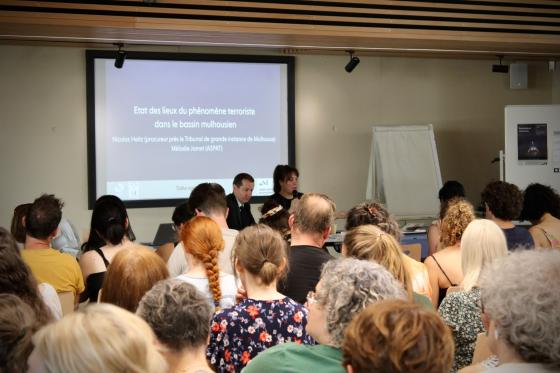
Participants first deepened their understanding of the mechanisms of radicalization in the Mulhouse region through presentations by Nicolas Heitz, a prosecutor, and Mélodie Jamet, an assistant specializing in the fight against terrorism and radicalization. Their presentations highlighted the Judicial Program for the Prevention of Radicalization (PJPDR) (in French), which recorded 218 reports in 2025. The French Ministry of Education plays a key role in this effort through reports submitted by schools. The speakers also highlighted the specific characteristics of the Mulhouse region, marked by its proximity to Switzerland and Germany, as well as by the increasingly younger profiles of those involved and the diversity of forms of radicalization, ranging from radical Islamism to far-right movements.
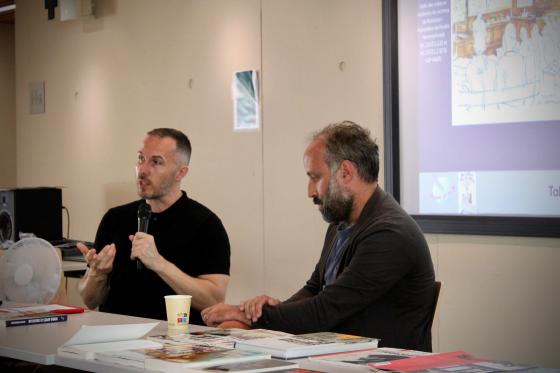
The event also provided an opportunity to analyze the evolution of the antiterrorism justice system since the law of September 9, 1986. Jean-François Ricard, Chief Prosecutor of the National Anti-Terrorism Prosecutor’s Office (PNAT), presented the main changes to the French judicial system. Drawing on his experience and a book on counterterrorism, he highlighted the seminal role of the 1986 law in the legal definition of terrorism, while also noting the intensification of judicial activity in this area. His remarks also sparked a discussion on the legacy of the special courts of the 1960s and on the challenges to the rule of law in the context of the fight against terrorism.
The impact of terrorism on victims was then addressed through the testimony of Arthur Dénouveaux, president of the Life for Paris association. He discussed the effects of post-traumatic stress, the resulting forms of community engagement, and the commemorative and political dimensions of the November 13 memorials. His remarks also sparked lively discussions with the audience on several topics: the role of audiovisual productions in the collective memory of the 2015 attacks; the debates sparked by the release of certain convicts from the V13 and Belgian trials (such as Mohamed Bakkali); the sometimes controversial uses of the term “resilience”; and a tribute to Fred Dewilde, a Bataclan survivor who visited Saint-Exupéry Middle School. In this regard, he specifically referenced philosopher François Azouvi’s book, From Hero to Victim: The Contemporary Metamorphosis of the Sacred (2024), in his reflection on the status of victims.
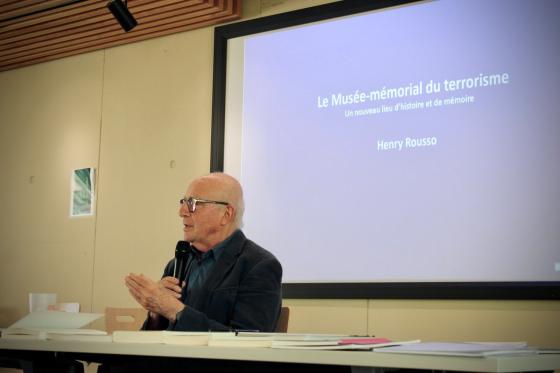
Finally, the contribution of research to understanding the phenomenon of terrorism was highlighted through presentations by Denis Peschanski and Henry Rousso. Their reflections focused on the challenges of memory, transmission, and museography. Denis Peschanski presented the work of the November 13 Program (in French), which illustrates the complementary nature of the life sciences and the humanities and social sciences in studying the effects of the attacks on the mechanisms of memory—at the cerebral level as well as on the individual and collective scales. Henry Rousso, for his part, discussed the origins of the Museum-Memorial of Terrorism and the role that history and social history museums can play in understanding and conveying these contemporary acts of violence.
The day also featured a tribute to Lino Sousa Loureiro, a victim of the attack in Mulhouse on February 22, 2025. A year and a half after the incident, participants reflected on the limited media coverage of this event as well as the challenges of commemorating it at the school and city levels.
The MMT: A Key Player in Training Educational Communities
Through initiatives such as this, the Museum and Memorial of Terrorism continues its commitment to the educational community by offering training programs for teachers and administrative staff on terrorism, issues of remembrance, counterterrorism justice, as well as media, image, and information literacy.
For further assistance: lancelot.arzel@memorial-terrorisme.fr
© GIP MMT
© GIP MMT
© GIP MMT
© GIP MMT
© GIP MMT