
© Oklahoma City National Memorial Museum
Rencontre avec deux personnalités d'exception
L'interview de Kari Watkins
Publié le
4 mars 2025
modifié le
17 février 2026
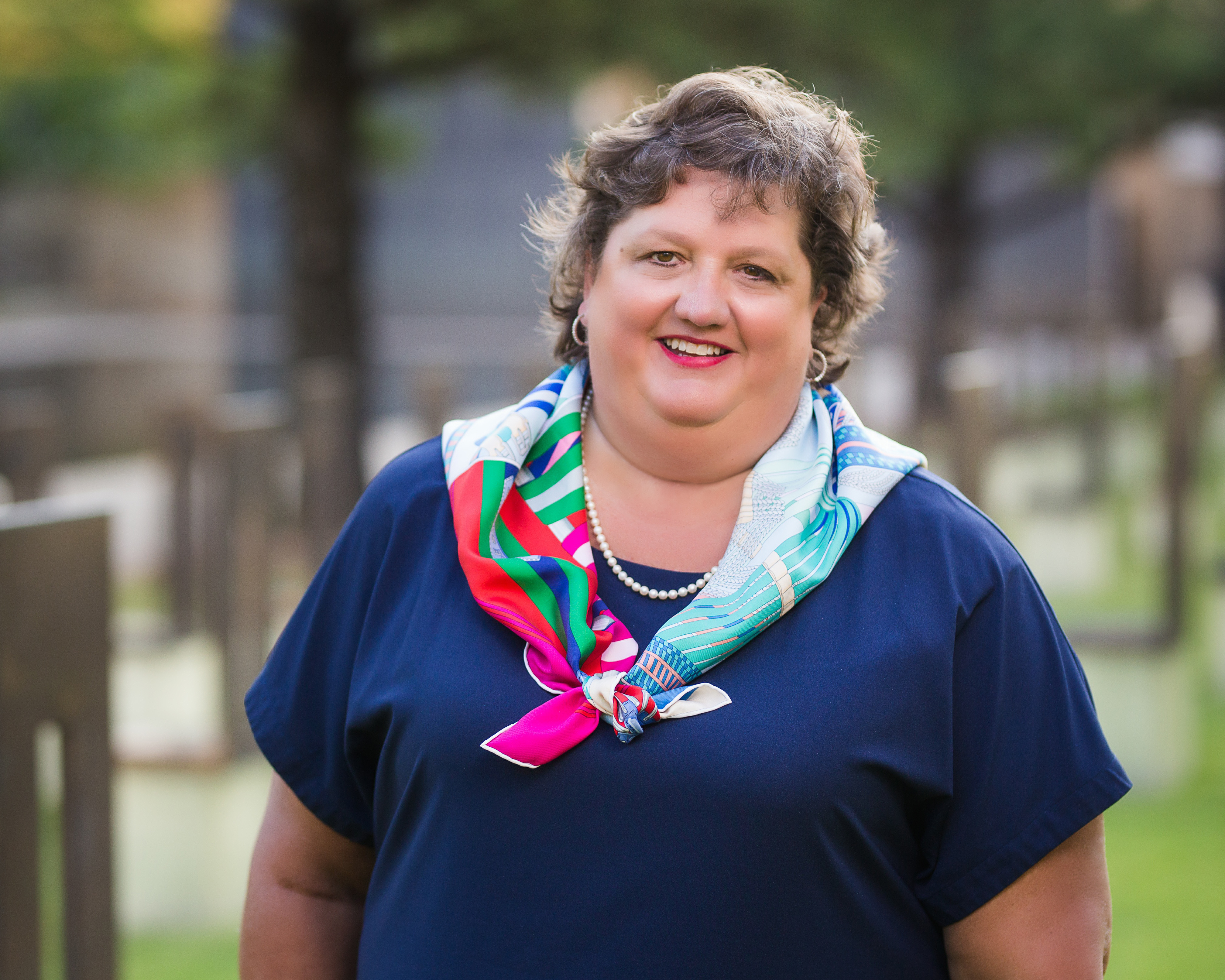
Kari Watkins, President & CEO, Oklahoma City National Memorial & Museum
19 April will mark the thirtieth anniversary of the Oklahoma City bombing. What does this attack represent in the history of the city and the state, and more broadly in the recent history of the United States?
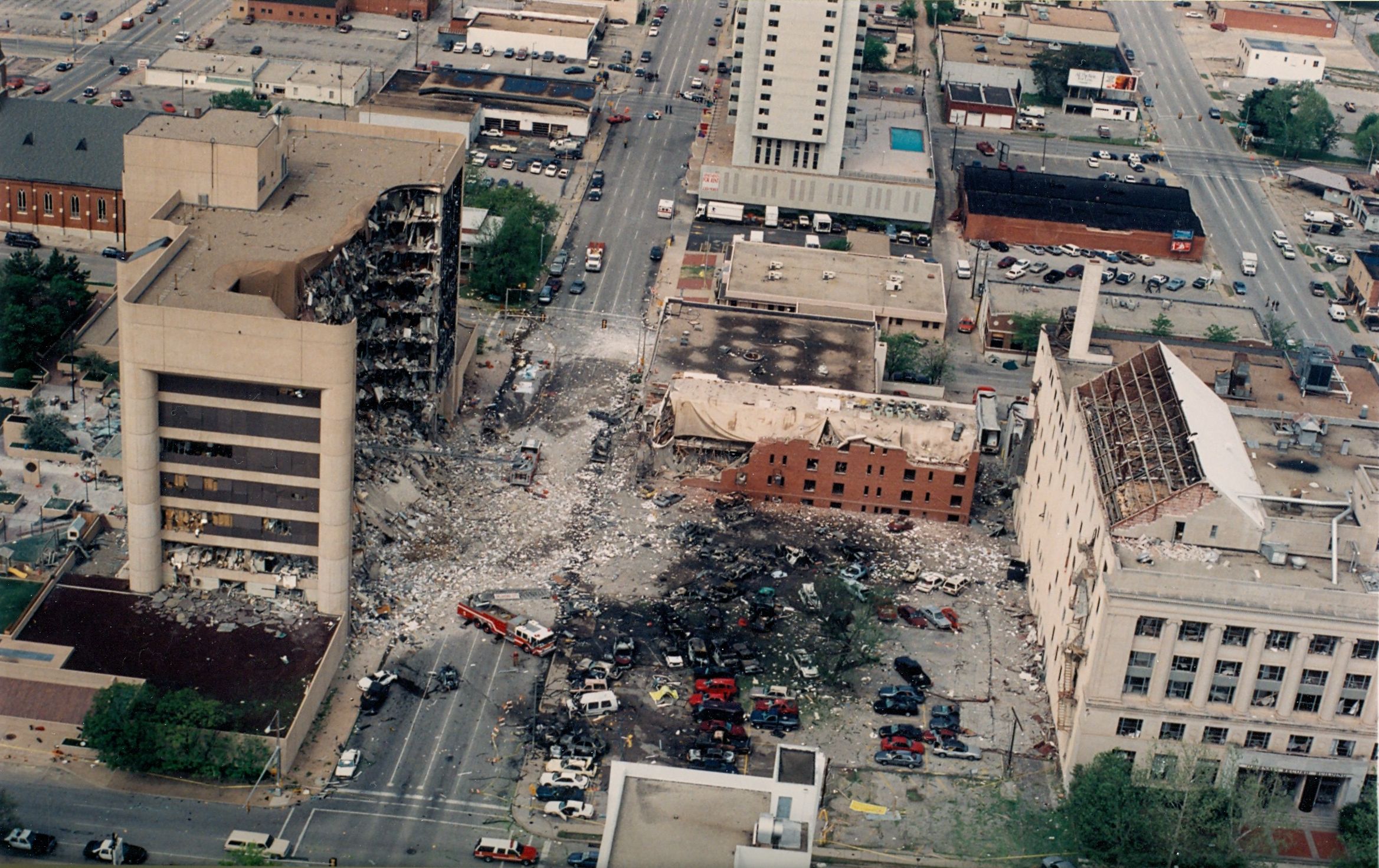
The attack on the Alfred P. Murrah Federal Building was an attack against the United States government and its people. It was an attack on innocent people who worked for the Government or people who were utilizing government services. It changed how we look at our own safety, workplace safety and access around Government buildings. As a result, Pennsylvania Avenue in front of the White House in Washington, D.C. was closed and federal buildings security around the country was enhanced. Liberty and Security are a delicate balance. We gave and continue to relinquish some personal liberties for a more secure world.
The memorial was inaugurated five years after the attack, in April 2000, and the museum in February 2001. Did you encounter any difficulties in setting up this project? What impact did 9/11 have?
Creating and building the Oklahoma City National Memorial and Museum was a process. It began with a 350-member task force appointed by the Mayor of Oklahoma City and later became a 501(c)3 nonprofit foundation that would raise the money, own, and operate the permanent facility. The Oklahoma City National Memorial was dedicated on the fifth anniversary of the bombing, April 19, 2000. The Museum (and funding mechanism for the entire operations) opened the following February. This site was built through an inclusive community process with meetings of family members, survivors and first responders on the last Monday night of the month for more than five years.
The Memorial design was discovered through an international design competition. A Museum Working Group Sub-Committee of the Memorial (made up of stakeholders, counselors, educators, and community volunteers) created a storyline for the Museum and that was given to five of the top Museum Design companies in the United States. Once the designers were selected, they went to work with an ad-hoc committee called the Museum Working Group and spent the next two years collaborating with the key stakeholder group that met monthly approving designs, processing artifacts and stories and samples of cases. It was a very inclusive process that was not perfect, but everyone had the opportunity to be involved and give input and be a part of the selection, critical to our mission then and still is today.
The events of 9/11 did not change our story or our Mission but reminded us of that the threat of terrorism has not gone away and is more prevalent. We can never accept violence as a means of making a statement against the government. Together, we resolve to continue to teach this story to impact change.
The architecture of the Oklahoma City National Memorial is highly symbolic. How does it express and commemorate this event? Why did you choose to combine a memorial, a museum, and an institute for the prevention of terrorism in one place?
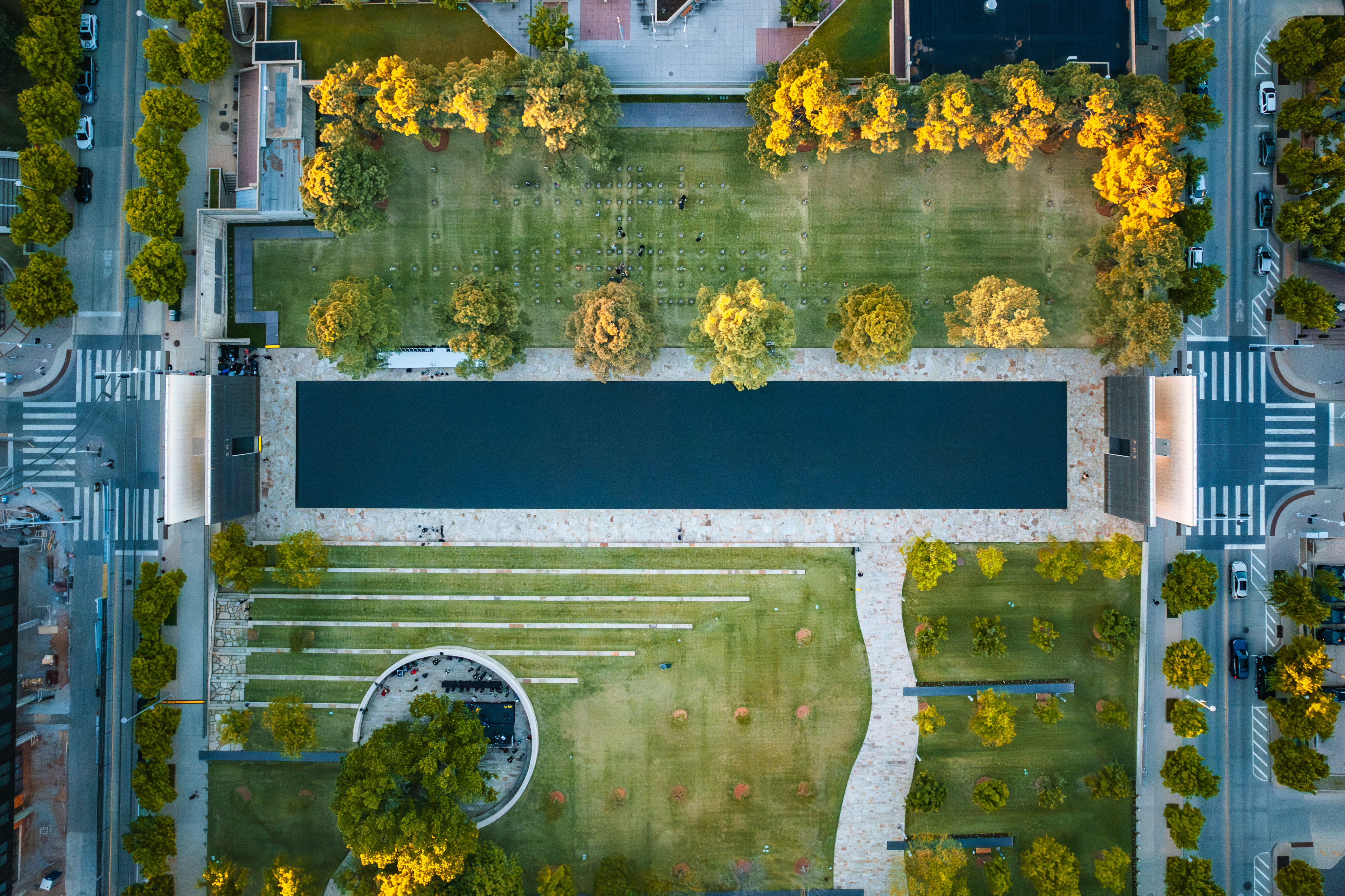
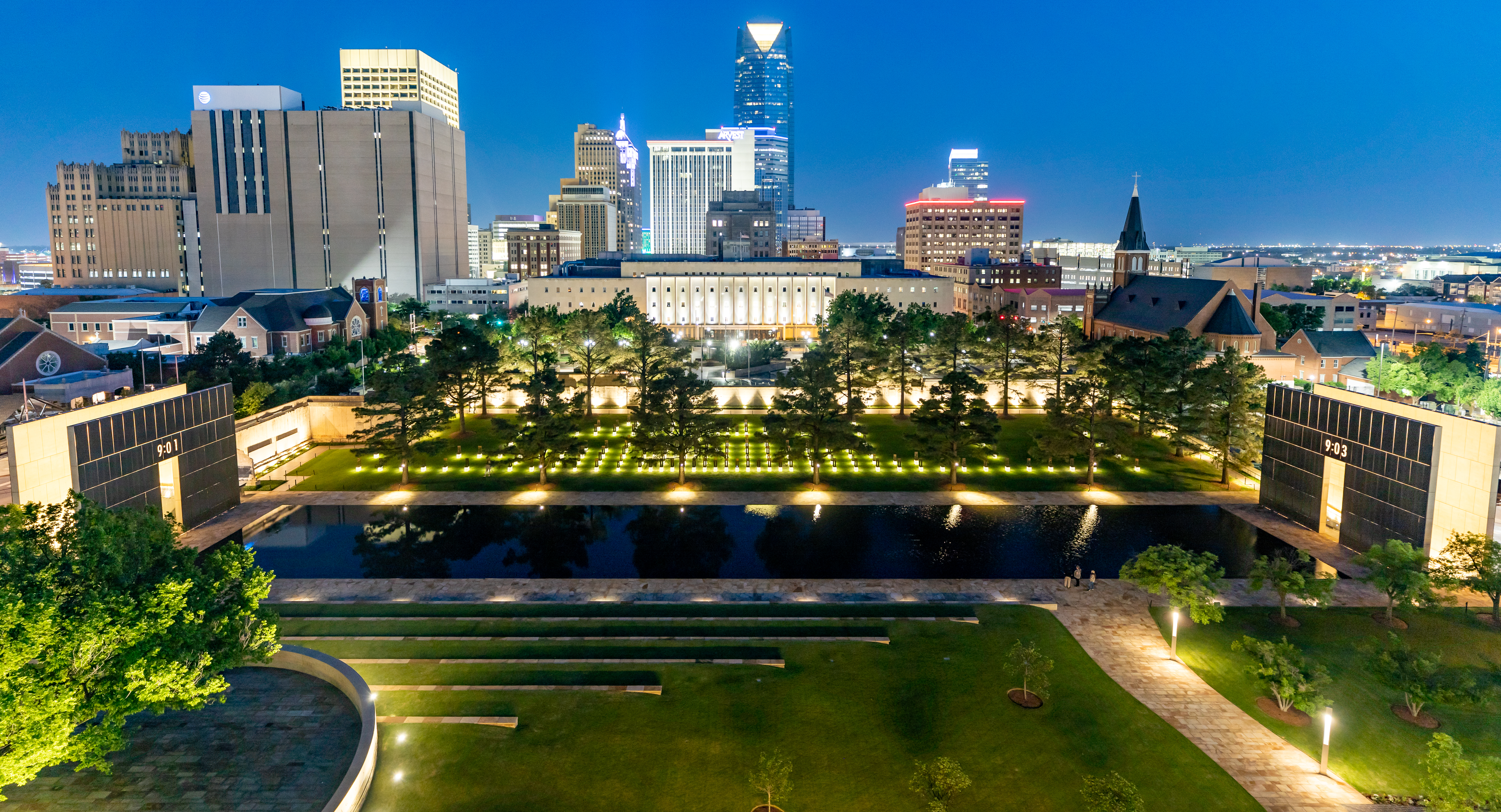
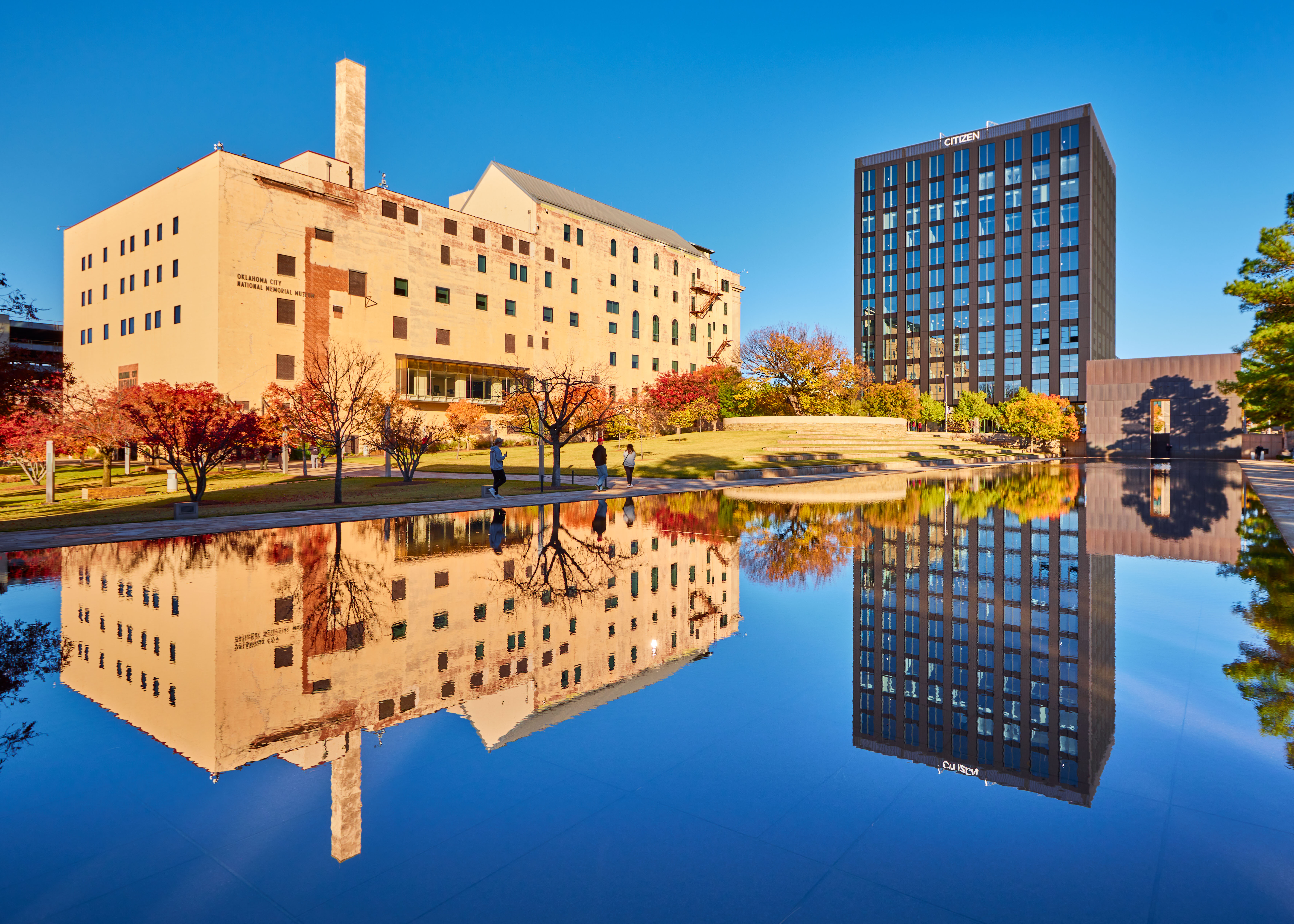
The Memorial has been built on what remains the site of the largest domestic terrorist attack on American soil. The places where the symbolic elements were placed were mentioned in the Memorial Mission statement and it guided the design. The outdoor site is meant to be symbolic and reflective. Every feature in the Memorial represents important guiding principles of our Mission Statement including the Chairs (a place where each person is remembered), the Survivor Tree (a mandate to keep a 100 year old Elm tree in the parking across the street that provided shade to so many each day, the Survivor’s Chapel, a place that would list all of the Survivors and the Rescuer’s Orchard where we could celebrate the heroic work of the first responders.
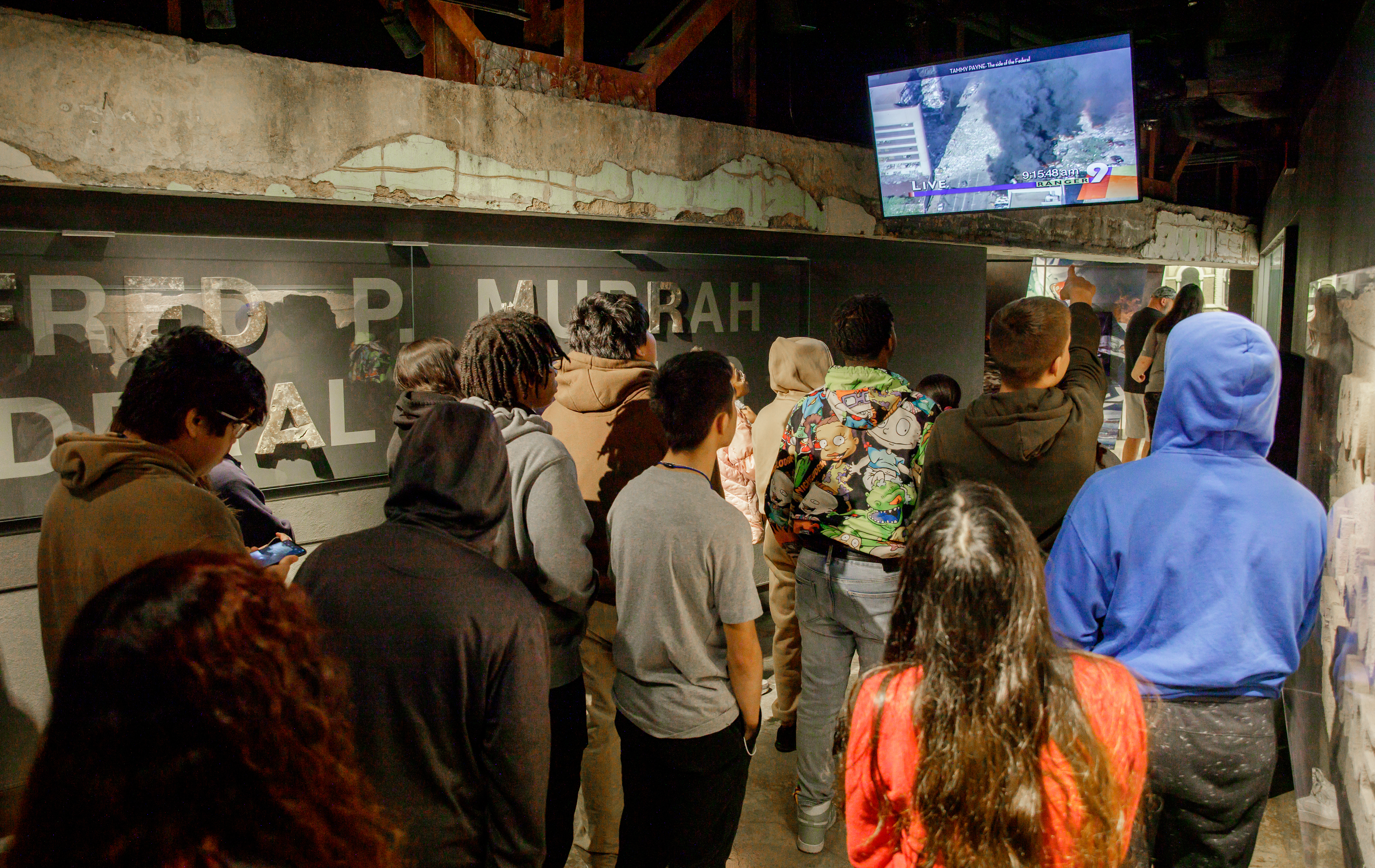
The Museum, adjacent to the Memorial was created in a building ravaged by the bomb. It is a place of education, where the key facts and records are kept. It teaches visitors to never forget the event or the people it touched. The personal stories, artifacts, videos, and interactives give visitors several ways to learn the story and teach about the loss of innocence and the security that can follow a terrorist attack.
Both work hand in hand to show the impact of violence and the details of how a community came together to overcome such an event. Our Mission Statement has a line in it that reads « It is important that such a tribute in no way diminish the tragedy, but rather, that it offers an inspiring contrast between the brutality of the evil, and the tenderness of the response.
The Memorial Institute for the Prevention of Terrorism was spun off with a different board and staff in 2000 and is no longer in business.
The Oklahoma City attack will be presented in the future permanent exhibition of the Memorial Museum of Terrorism, more specifically in a section devoted to extreme right-wing terrorism since the 1990s. Could you tell us about one of the objects or documents that you are planning to include in the future museum?
I know these are still up for discussion, but the items may include The Turner Diaries , a book that became a blueprint for actions like the Oklahoma City bombing and other extremist movements, pieces of granite from the bombed Alfred P. Murrah Federal Building, personal items from the victims and possibly a letter written by the perpetrator to a local news reporter giving insight into the mindset of a terrorist. These items are used to teach, to understand and to show how innocent people are dealing with the extreme right- and left-wing movements. All this portrays and teaches the senselessness of violence.
Why is it important for your institution to work with the future Memorial Museum of Terrorism?
It is important for the Oklahoma City National Memorial & Museum to create a partnership with other Museums around the world that have the same mission of education, remembrance and working together in solidarity to show the senseless impact of violence.
We have learned so much over the past 30 years; we want to help and share our experiences with these newer memorial and museums of contemporary history being designed and developed.
What types of visitors do you receive and what feedback do they get after their visit?
Since opening in 2001, we have received visitors monthly from all 50 states and average visitors from a dozen countries each month. They are humbled by what they learn, intent to resolve to work together and find common ground on this sacred ground.
After 25 years of existence, are you facing new challenges? Have the missions carried out by your institution changed? How does OKCNM fit into the current context of profound change throughout the country?
The Memorial Mission statement written 29 years ago is as strong today as it was in 1996 when approved by the Memorial Task Force. It gives us profound guidance on how to move forward to create a participatory museum that instills an understanding of the senselessness of violence, especially as a means of effecting government change.
While the Mission has not changed, the media and mediums in which we tell the story have and will continue to change. Using innovative technology and design we work to remain relevant and teach this story to people who have never learned about it.
Our goal is to remain a significant site and keep sharing our story in the Museum, online resources and through different forms of media. Oklahoma City is a city on a hill, shining a light to other cities impacted by terrorism. We must continue to show the world that we can meet in the middle and work together as a contemporary place of remembrance built to stand the test of time. We have done just that, and our work must continue.
We do not receive annual government funding but have a great working relationship with every level of government, our key stakeholder group, and our community. Most importantly we teach this story to a community of people who did not live here 30 years ago or were not even born.
In April of 2015, I was the mom of two teenagers, and we were sitting in church on a Sunday when our minister was talking about rethinking churches. I wrote this down that morning and still have it on my desk today. “Education is changing, we don’t have the luxury of ignoring their new learning styles and risk losing a generation of kids.” That means more today than a decade ago.
The story, the mission, and the message must continue to be taught. It is our responsibility to meet our visitors and our community where they are willing to learn this story. As we commemorate this 30th Anniversary, we continue to showcase our primary educational program called Better Conversations, where we focus on challenging topics, encourage tabletop discussions, and resolve to have generous listening, patience, hospitality, adventurous civility, humility and remembering that words matter. We also highlighting a new education project called Journey of Hope that travels to all 77 Oklahoma counties. Journey of Hope recognizes those who were killed, those who survived and those changed forever in every presentation and brings this story to a new generation of students and teachers.
As part of our 30th Anniversary year The Museum will open a new exhibit “Are We Safer Today” featuring an AI component that allows subject matter experts to answer visitor’s questions about our safety and what has changed over the past three decades. We have also unveiled a vision for our historical landmark museum addition – Foreword—which will build on the chapters of the April 19, 1995, story and what has happened since. Visitors will ascent to the new lobby level, greeted by curated art salvaged from the Murrah Federal Building itself and an overview of the Museum’s ensuing chapters. Other features include a new Civics Lab, and a new Orientation Gallery is perched atop Level 2 where visitors will get a perspective of the Memorial site.
The 30th Anniversary on April 19, 2025, will reflect on A Day of Darkness and Years of Light. We will focus on what was taken from us, and how we worked together as a community to be and share the light. We have come from darkness, and it is imperative that we continue to spread light to our visitors, to our community, to the world, especially offering light and hope to the school children. It is essential our stakeholders are with us on this mission. This is their story, and the story of how our country came together. We will continue to preserve and share their story, and we are honored to be the guardian of teaching generations to Be the Light!